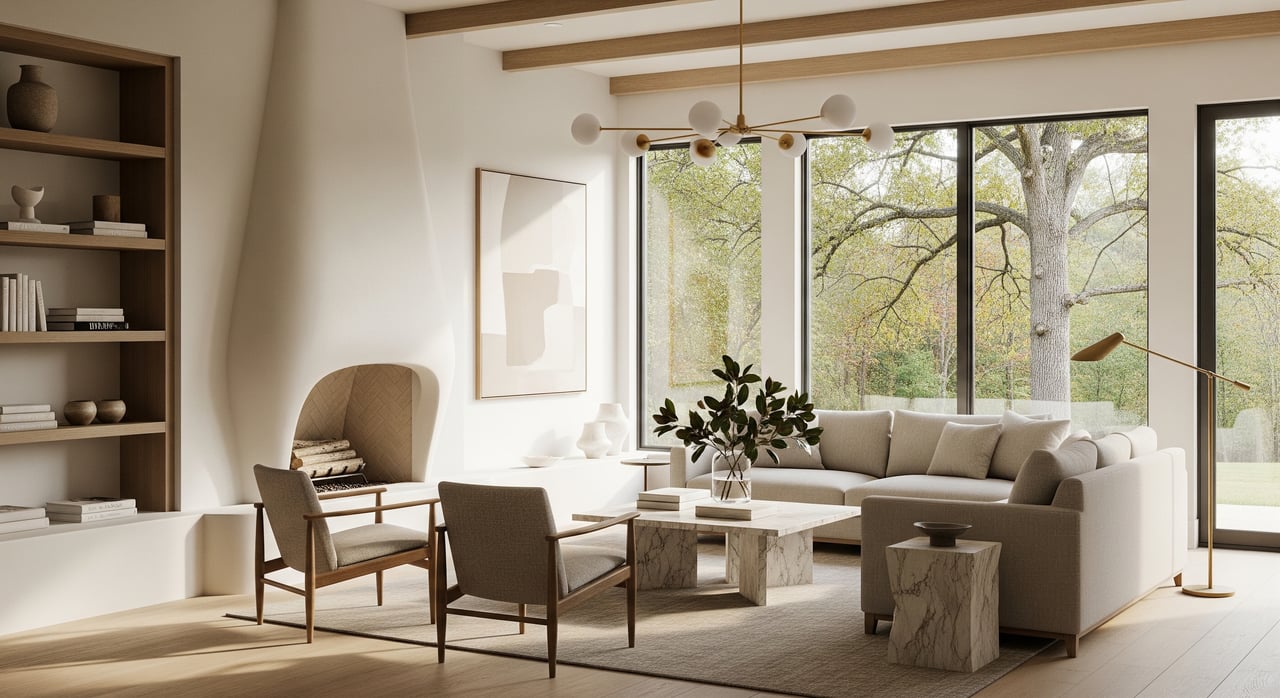
Wondering how to stage a design-forward or mid-century home in Chapel Hill without losing what makes it special? You care about proportion, materials, and the story of your space. You also want buyers to move quickly and pay a premium for authenticity. In this guide, you’ll learn a research-backed plan to elevate presentation, shorten time on market, and protect your home’s character. Let’s dive in.
Why Chapel Hill buyers notice design
Chapel Hill’s buyer pool often includes university professionals, Research Triangle employees, and design-minded shoppers who value authenticity and walkability. Many homes sit on wooded lots or gentle slopes, which makes indoor and outdoor flow especially important. When a listing highlights original features and makes the lifestyle clear, buyers tend to engage faster.
For high-design and mid-century properties, authenticity matters. Original wood, built-ins, post-and-beam structure, and window walls are perceived as assets when presented well. Staging is your tool to frame those qualities so they read as both beautiful and practical for modern living.
What staging changes most
Industry research consistently points to three core benefits. First, staged homes usually photograph better, which drives online clicks and early showings. Second, staging helps buyers visualize how they would live in the home, which can increase emotional engagement and speed to contract. Third, a price premium is possible, though the size varies by market and property type.
The return on staging is context dependent. It tends to be strongest when the home is vacant or architecturally distinct, the price point supports the investment, and local comps are limited. In those cases, presentation can be the differentiator that moves your $/sqft.
Prioritize for impact
Use this practical order of operations to focus your budget where it counts:
- Safety and major defects. Address anything that could derail inspection or appraisal. These are prerequisites.
- Curb appeal and entry. Simple, low-maintenance landscaping and lighting create a strong first impression in photos and in person.
- Deep clean and declutter. Clear surfaces and storage areas. This is high-benefit and low cost.
- Lighting and photography. Bright bulbs, layered lighting, and professional listing photos are non-negotiable for online traction.
- Targeted cosmetic updates. Fresh paint, modern hardware, and light fixture swaps shift perception without a full remodel.
- Professional or partial staging. Focus on flow, scale, and architectural focal points.
- Larger renovations. Only when comps clearly justify the spend or functionality is far behind the neighborhood norm.
Typical cost ranges
- Declutter and deep clean: $200 to $1,000
- Interior painting: $3,000 to $15,000
- Minor kitchen refresh: $3,000 to $15,000
- Bathroom refresh: $1,000 to $8,000
- Professional staging (occupied): $500 to $4,000, or $1,500 to $5,000 for a package period
- Professional staging (vacant): $3,000 to $15,000+
- Professional photography: $150 to $1,000
These ranges reflect national and industry guidance. Always confirm with local Chapel Hill bids.
Room-by-room strategy
Entry and curb
- Keep plantings tidy and low-maintenance.
- Refresh mulch and prune shrubs to show the architecture.
- Add a simple, period-appropriate doormat and a single focal planter.
- Ensure walkway and door lighting are bright and consistent.
Living room or great room
- Position seating to draw attention to the fireplace or window wall.
- Use simple, modern silhouettes that echo the architecture.
- Maintain visible floor area to highlight scale and proportion.
- Keep accessories minimal so the room’s lines remain clear.
Kitchen
- If original cabinetry is in good shape, keep it. Update hardware, lighting, and counters if needed.
- Clear countertops. Style with one bowl of fruit or a vase rather than a full setup.
- If finishes look tired but functional, a light refresh often outperforms a major remodel on cost-to-perceived-value.
Bathrooms
- Brighten lighting, refresh grout and caulk, and replace worn hardware.
- Consider a clean-lined mirror or updated faucet to modernize the space.
- Keep colors neutral and finishes consistent with the home’s era.
Bedrooms
- Scale beds and nightstands to show generous circulation.
- Reduce personal items and visual clutter.
- Add a simple storage solution or open closet segment to reassure on function.
Architectural details
- Spot-clean and condition original woodwork and exposed beams.
- Style built-ins with books and a few sculptural objects.
- Keep nearby walls uncluttered so details stand out in photos.
Windows and light
- Avoid heavy draperies that hide unique glazing.
- Use simple window treatments that maximize daylight.
- Layer task and accent lighting for evening showings and warm photography.
Mid-century style cues that sell
- Palette: Warm neutrals with a restrained accent color such as teal, mustard, or olive.
- Materials: Wood, leather, glass, and metal accents read as authentic.
- Art and accessories: One large piece per wall works better than many small frames. Sculptural objects beat knickknacks.
- Rugs and textiles: Use rugs to define seating areas. Avoid busy patterns that fight clean lines.
- Negative space: Leave breathing room around key furniture to let the architecture shine.
Show indoor–outdoor flow on wooded lots
Many Chapel Hill homes sit among trees with layered views. Help buyers understand how the home lives day to day.
- Stage decks and patios with a simple table and two to four chairs.
- Keep sightlines open from living areas to exterior seating spaces.
- Trim branches that encroach on windows and refresh mulch for crisp photos.
- Add subtle path lighting to clarify circulation at twilight.
Vacant vs. occupied: the right approach
- Vacant homes. Full staging is often worth it. Empty rooms look smaller and flatter in photos, and buyers struggle to read scale and flow.
- Occupied homes. Focus on decluttering, neutralizing, and a few curated rentals to fix scale or update style. You can often work with what you have plus targeted additions.
Budget templates for Chapel Hill sellers
Use these starting points, then adjust based on comps and timing.
- Photo-ready polish (occupied): Deep clean and declutter, paint touch-ups, bulb replacements, two to three new light fixtures, selective rentals for scale. Approximate spend: $1,500 to $6,000.
- Design-forward refresh: Whole-house paint in a warm neutral, minor kitchen and bath updates (hardware, faucet, mirror), layered lighting, partial staging. Approximate spend: $6,000 to $18,000.
- Vacant showcase: Full staging package for key spaces, exterior spruce, professional photography with twilight exteriors. Approximate spend: $5,000 to $20,000+ depending on duration and square footage.
These budgets aim to maximize perceived value without over-improving. Your agent should calibrate the spend to recent sold comps.
When a remodel makes sense
If the kitchen and baths function well, light-touch updates paired with strong staging usually deliver a better near-term return than a major overhaul. If a layout is clearly behind neighborhood standards or fixtures are severely dated, a targeted remodel can be justified. Use current comps to set the ceiling on what the market will support.
A research-led, art-forward process
You deserve a clean, data-informed plan. A typical design-forward listing process looks like this:
- Strategy session. Review comps, buyer profile, and the home’s strongest architectural features. Decide where staging and light updates will move $/sqft.
- Scope and schedule. Map tasks in order of impact, including decluttering, paint, lighting, and exterior prep.
- Curated presentation. Combine professional staging with thoughtful art placement to echo the home’s era and lines.
- Pre-sale improvements. When appropriate, use concierge-style support and trusted contractors for quick, high-ROI updates.
- Visual marketing. Commission professional photography and, when helpful, twilight exteriors to convey indoor–outdoor living.
- Launch plan. Choose an on-market, off-market, or phased strategy based on your goals for privacy, timing, and exposure.
This approach respects your home’s design while meeting today’s buyers where they start, which is online.
Final takeaways for Chapel Hill sellers
- Lead with authenticity. Preserve and highlight original elements.
- Invest in presentation. Staging and pro photography sell the story of the space.
- Spend where it shows. Paint, lighting, and hardware often outperform costlier projects.
- Make the lifestyle obvious. Clarify flow and outdoor living in both photos and in-person showings.
Ready to map a staging plan tailored to your home’s architecture, timeline, and comps? Schedule a quick consult with Shenandoah Nieuwsma to explore next steps.
FAQs
Is staging worth it for a mid-century home in Chapel Hill?
- Often yes. It highlights original features, clarifies flow for photos and showings, and can shorten time to contract, with the strongest gains for vacant or architecturally distinct homes.
What does professional staging cost in Orange County, NC?
- Occupied homes may spend $500 to $4,000 for targeted staging or $1,500 to $5,000 for a package period, while vacant staging typically ranges from $3,000 to $15,000+ depending on scope and duration.
Which updates deliver the best return before listing?
- Paint, lighting, hardware swaps, and light kitchen or bath refreshes often produce strong perceived value compared to major remodels when layouts already function well.
How should I show indoor–outdoor flow on a wooded lot?
- Stage patios and decks with simple furniture, clear sightlines from interior rooms, trim vegetation at windows, and consider subtle path lighting for photos and evening showings.
Should I keep or replace original cabinetry and woodwork?
- Keep original elements when they are in good condition. Update with hardware, counters, and lighting to modernize without erasing authentic character.
How long does pre-listing preparation usually take?
- A light polish can be completed in one to two weeks, while a design-forward refresh with minor updates and staging may take three to six weeks depending on contractor availability and scope.
