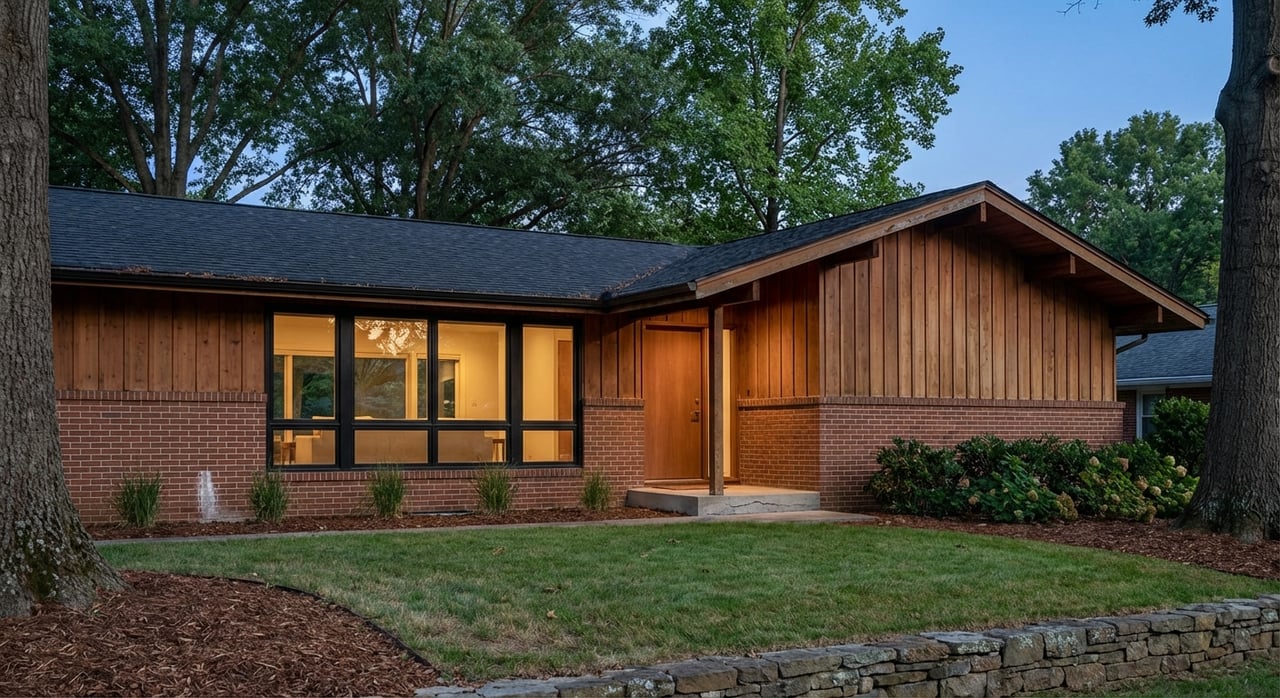
Picture windows framing tall pines. Warm wood, clean lines, and rooms that flow into the yard. If you light up when you see those details, you are likely a mid‑century modern fan. In Durham, you can find authentic examples that pair design character with everyday comfort. This guide shows you where to look, what to check during tours and inspections, how renovations affect value, and which local rules and incentives matter. Let’s dive in.
What defines mid‑century modern
The term mid‑century modern typically covers post‑WWII homes from the 1940s through the 1960s. Hallmarks include simple forms, functional floor plans, and a strong indoor‑outdoor connection. You will often see low or gently pitched roofs with wide eaves, large panes of glass, and post‑and‑beam framing that opens rooms to each other.
According to design editors, reliable identifiers are clean lines, asymmetric or open plans, expansive glazing, and straightforward materials like brick, wood, and stone. Interiors often favor single‑level living or split‑level layouts that feel connected to the yard. This overview from ArchDaily offers helpful context for buyers.
Why this matters: those features create the airy feel you love, but they also shape maintenance and upgrade choices. Think low‑slope roofs, large single‑pane windows, and exposed wood elements. You can plan for beauty and upkeep if you know what to look for.
Where to find them in Durham
The Triangle has a rich modernist thread thanks to postwar growth and local design influence. A regional roundup by Axios highlights how much modern design took root here. In Durham, you will find mid‑century homes in several pockets and as scattered infill.
Colony Park
In west Durham, Colony Park includes a concentration of 1950s–1960s ranch and split‑level homes on wooded lots. Many have been updated while keeping original rooflines and picture windows. Recent sales for refreshed mid‑century homes here have ranged from the mid‑400s to the upper‑700s depending on lot size and level of renovation. Proximity to Duke University and mature trees add to the appeal for design‑minded buyers.
Rockwood and Lakewood corridor
Along the Chapel Hill Road corridor, the Rockwood and nearby Lakewood areas filled in during the 1950s–60s with ranches and modest contemporary plans. If you are exploring west and northwest Durham, these neighborhoods are good places to keep on your list. For neighborhood history and context, OpenDurham’s Rockwood page is a useful starting point.
Hope Valley examples
Durham is not only tract ranches. You will also find architect‑designed Modern Movement homes. One example is the John C. and Binford Carr House, built in 1958 in Hope Valley and documented as Modern Movement architecture. It illustrates the range you can encounter, from simple ranches to distinctive, custom modernist homes. You can read more about the Carr House on its National Register entry.
Scattered finds across the west and south
Mid‑century ranches and split‑levels are dispersed in southern and western Durham. Many have been expanded or remodeled. Visual cues like low rooflines, clerestory or ribbon windows, exposed beams, and wide eaves help you spot original mid‑century bones, even when the exterior has been updated.
Pricing note: as a general baseline, Durham’s citywide median sale price was about 380,000 in January 2026. Condition, location, and architectural significance can swing values well above that. Sensitive restorations or architect‑designed examples often command premiums over generic ranches nearby.
Touring checklist: quick visual cues
Use this short list during showings to capture both the design value and likely maintenance items.
- Roof form and drainage. Look for flat or low‑slope areas, ponding, patched membranes, or makeshift scuppers. A recent membrane with documentation is a positive sign. Ask the listing agent about age, material, and any added insulation.
- Windows and glazing. Large single‑pane picture windows and steel frames are part of the look but are not very efficient. Check for fogging, condensation, sticky operation, and soft or rotted sills. DOE‑aligned guidance on efficient windows can help you think through comfort upgrades while preserving character.
- Interior character. Note original built‑ins, wood paneling, terrazzo, and exposed beams. These details add value for design‑conscious buyers and cost more to re‑create if lost. Photograph intact features so you can plan your offer and renovation scope.
- Site drainage and overhangs. Mature trees are a plus, but check grading that slopes away from the foundation, along with soffits and fascia for signs of moisture.
Inspections to order
A strong inspection plan protects your budget and your vision for the home.
- Full home inspection. Order a comprehensive inspection and, if possible, choose someone experienced with older and mid‑century construction. Typical issues include aging roof membranes, crawlspace ventilation, and outdated electrical panels. Here is a helpful consumer overview of what inspectors evaluate from AmeriSave’s inspection guide.
- Termite and pest inspection. Eastern subterranean termites are common in North Carolina. Ask for any past treatment records and address moisture or wood‑to‑soil contact. The NC State Extension’s termite guide explains what to monitor and why professional treatments matter.
- Asbestos and lead testing. Homes built before 1978 can contain lead paint, and you may find asbestos in old floor tile, pipe insulation, ceiling textures, or roofing. Standard inspectors do not sample for these, so plan certified testing if materials are suspect.
- Roof moisture or infrared scan. On low‑slope roofs, leaks can be intermittent. A moisture scan helps locate trapped water. Ask for roof history and any manufacturer warranty.
- Window and glazing assessment. Replacing large custom panes or steel frames can be a major expense. Get quotes for restoration, storms, or thermally improved replacements so you can compare options.
- Radon and mold testing. Add these if the home has a slab or enclosed crawlspace or if you see conditions that suggest poor ventilation.
Common costs and tradeoffs
Every home is different, but mid‑century features can concentrate costs in a few places. Planning for these helps you avoid surprises.
- Roof membranes. Low‑slope roofs often rely on specialized membranes. Replacement can range from multiple thousands to tens of thousands of dollars depending on size, material, and insulation. Documentation of type and age is valuable when you negotiate.
- Windows and efficiency. Full‑house window programs are often the largest mid‑range retrofit expense. Consider a spectrum of options: restoration where feasible, adding storms, or selective replacement with double‑pane, low‑E units. DOE‑aligned resources on efficient windows show measurable comfort and energy gains, though payback varies with Durham’s climate and the number of windows.
- Electrical and HVAC. Expect to evaluate service panels, wiring, and older HVAC. Many buyers choose modern high‑efficiency heat pumps. Typical HVAC lifespans are 10 to 20 years, so age and service history matter when you budget.
Renovations that add value
You can refresh a mid‑century home while keeping what makes it special. The strongest outcomes tend to combine comfort upgrades with respect for original architecture.
- Kitchen and bath updates. Thoughtful, midrange kitchen and bath improvements often make a home feel move‑in ready and can recoup a higher share of cost at resale than luxury overhauls. National Cost vs Value data support prioritizing targeted interior updates and certain exterior elements over high‑end gut projects.
- Window strategy. Consider selective replacement or restoration to improve comfort while preserving sightlines and original frames. Whole‑house replacement is a larger investment, so compare quotes across approaches.
- Roof improvements. When replacing a low‑slope membrane, ask about tapered insulation and modern materials that improve drainage and reduce ponding. Good detailing pays off in durability and comfort.
- Keep the character. Built‑ins, paneling in good condition, stair rails, and exposed beams are part of the home’s story. Retaining these features while reworking circulation or adding modern mechanicals often yields a timeless result and stronger resale appeal.
Rules, permits, and incentives
Before you plan exterior work, verify whether the home sits in a local historic district or is a designated local landmark. If so, exterior changes that are visible from the street, including window replacement, siding, and roofing, usually require a Certificate of Appropriateness. You can review what triggers a COA and how to apply on the City’s Certificate of Appropriateness page. Preservation Durham also maintains useful contacts and local guidance on its resources page.
If your home is a certified historic structure and you plan a preservation‑sensitive rehab, North Carolina’s homeowner rehabilitation tax credit can cover a 15 percent credit on qualifying expenses, subject to program limits and approvals. Review the tax credit language in Chapter 105 of the state statutes and contact the State Historic Preservation Office for project pre‑approval. You can start with the statutory reference here: North Carolina General Statutes, Chapter 105.
Quick buyer checklist
Use this to keep your evaluation focused and efficient.
- Confirm historic status. Check whether the home is in a local historic district or is a designated local landmark. If yes, expect a COA for many exterior changes. See the City’s COA overview.
- Gather records early. Request seller disclosures and any documentation for roof type and age, HVAC service, window work, and termite treatments.
- Order inspections. Book a full home inspection plus termite, and add asbestos or lead sampling if pre‑1978. Consider a roof moisture scan on low‑slope roofs. For a consumer overview, see AmeriSave’s inspection guide and the NC State Extension termite guide.
- Price the big three. Get quotes for the likely larger items in a mid‑century home: roof membrane work, window strategy, and HVAC upgrades. Compare those costs to neighborhood comps and projected resale appeal.
- Explore incentives. If the property is eligible and you plan a preservation‑sensitive rehab, review North Carolina’s homeowner rehabilitation tax credit requirements in Chapter 105 and consult the State Historic Preservation Office before work begins.
Let’s talk strategy
If you want a mid‑century home that balances design and daily comfort, the right plan starts before you write an offer. From pricing against neighborhood comps to preserving the features that will matter at resale, a research‑first approach helps you buy with clarity and confidence. When you are ready to tour or want a second set of eyes on a listing, schedule a quick strategy call with Shenandoah Nieuwsma. We know the Triangle’s mid‑century stock and can help you align vision, budget, and timeline.
FAQs
What is a mid‑century modern home in Durham?
- It is typically a 1940s–1960s house with clean lines, open or split‑level plans, low or gently pitched roofs, large windows, and simple natural materials that connect indoors and out.
Where in Durham can I find mid‑century homes?
- Look in west and south Durham, especially Colony Park, the Rockwood and Lakewood corridor, and parts of Hope Valley, plus scattered ranches and split‑levels across the area.
Are low‑slope roofs a dealbreaker for buyers?
- Not necessarily. They are common in mid‑century homes. Plan for careful inspection, ask about membrane type and age, and budget for eventual replacement or upgrades that improve drainage.
How much should I budget for window updates?
- Costs vary widely with size and scope. Restoration, storms, or selective replacement can improve comfort. Whole‑house replacement is a significant expense, so compare options.
Do I need approvals for exterior changes on a mid‑century home?
- If the home is in a local historic district or is a designated landmark, you will likely need a Certificate of Appropriateness for exterior work visible from the street. Check with the City of Durham early.
Are termites a concern in Durham?
- Yes. Eastern subterranean termites are common statewide. Order a pest inspection, ask for any treatment records, and address moisture or wood‑to‑soil contact conditions early.
